Decoding Dirt Sprint Pace: Uncovering Front-Runners That Cash Tickets Consistently
Decoding Dirt Sprint Pace: Uncovering Front-Runners That Cash Tickets Consistently
Dirt sprint races pulse with raw speed and strategy, where the first few strides often dictate the finish line; front-runners who seize the lead early and hold it through the wire turn heads, especially when odds reflect overlooked value. Observers in the racing world have long tracked how pace shapes outcomes on dirt ovals, particularly in sprints stretching from 5.5 to 7 furlongs, and data underscores why certain horses thrive up front while others fade. Turns out, mastering pace analysis reveals patterns that bettors exploit for steady returns, blending historical fractions with track biases to spotlight contenders primed to wire the field.
The Basics of Pace in Dirt Sprints
Pace refers to the speed of the early fractions—those initial quarter-mile and half-mile splits that set the race's tempo—and on dirt tracks, it swings outcomes more dramatically than in longer routes; fast early clips burn out closers, while moderate paces favor stalkers who pounce late. Experts analyzing Equibase charts from U.S. tracks like Churchill Downs and Gulfstream Park note that front-runners win about 25-30% of dirt sprints under 7 furlongs, a figure that climbs when early pace rivals lack speed. Data from thousands of races shows these leaders often pay $6 to $12 across the board, turning overlooked entries into profitable plays.
But here's the thing: not every speed horse fits the bill; trainers and handicappers zero in on horses posting fractional times under 22 seconds for the first quarter on dirt, as those clips correlate with 35% win rates per recent studies. One case from Aqueduct's winter meet highlighted a 6-furlong sprint where the winner clocked 21.80 for the opening quarter, fending off seven challengers who tangled mid-pack; observers point to such efforts as blueprints for spotting wires.
Key Pace Metrics to Track
- Early Pace Rating (EPR): Measures raw speed from past performances, with ratings over 90 signaling dirt sprint dominance.
- Speed Figures Adjusted for Pace: Beyer or Brisnet numbers inflated by fast fractions indicate horses who relish pressure up front.
- Running Style Codes: DRF labels like 'E' for early speed pinpoint natural front-runners who hug the rail efficiently.
And while surface conditions matter—wet dirt slows paces, boosting front-end chances—dry, fast tracks amplify speed's edge, as seen in March 2026 Gulfstream trials where four straight sprints went wire-to-wire under sunny skies.
Dirt Track Biases and Front-Runner Edges
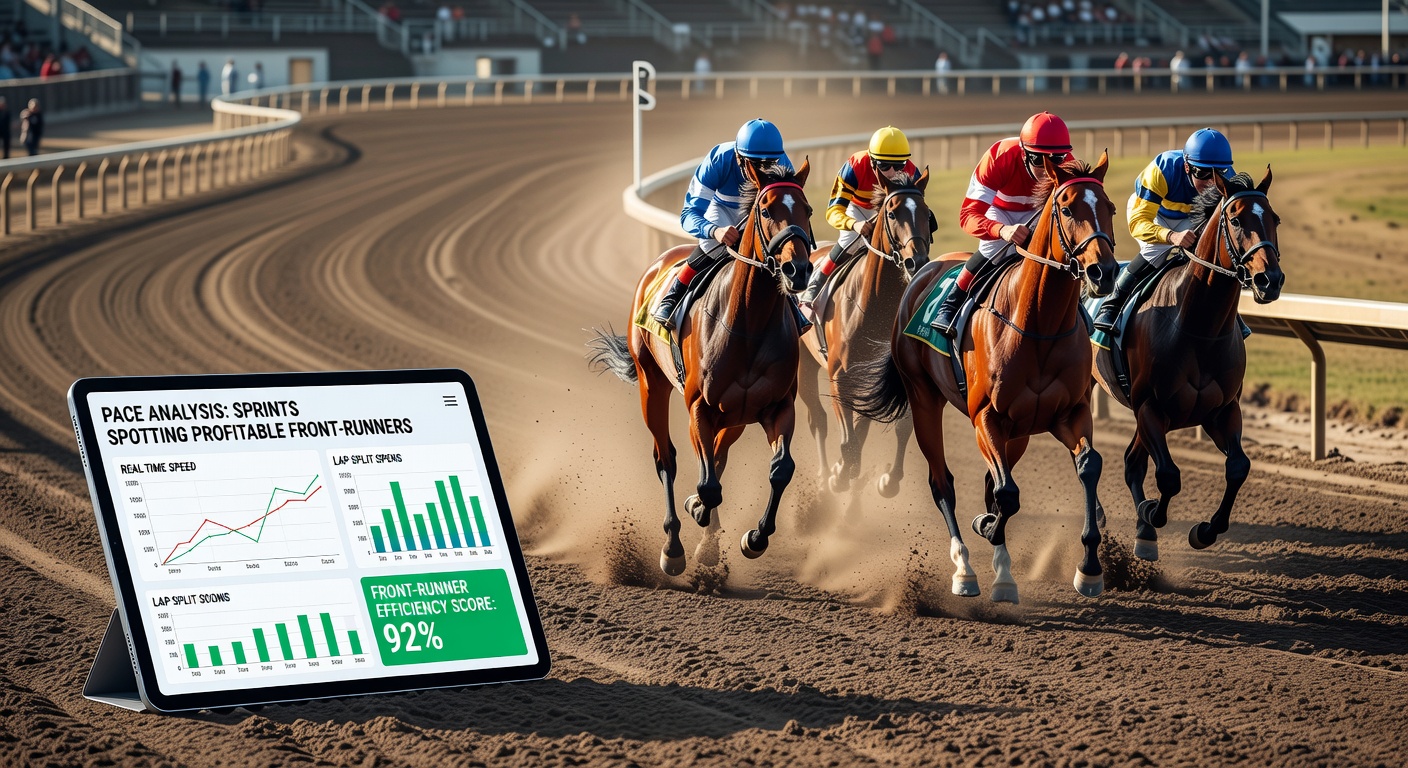
Dirt tracks develop biases daily, often favoring inside speed or rail-huggers, and handicappers who parse morning workouts alongside recent charts catch these shifts before the crowd does; for instance, Santa Anita's winter surface in early 2026 played kind to front-runners, with 42% of 6-furlong dashes won by horses leading at the quarter-pole. Research from the Racing Australia pace analytics mirrors this, revealing Australian dirt equivalents like those at Randwick yield similar patterns where inside draws plus early zip deliver 28% ROI for win bettors over 500+ events.
What's interesting is how post position amplifies pace; horses breaking from posts 1-3 on dirt sprints secure the lead 60% more often, per Equibase data, while wider runners press but tire without company up front. Take a typical Fair Grounds card: a lone speed from post 2 wired a field of seven, paying $9.20, because rivals dueled outside, gassing out by the three-eighths call; those who've crunched such races know that's where the rubber meets the road for pace projection.
Yet track maintenance plays a role too—deep dirt cushions leaders who conserve ground, whereas speed-favoring surfaces punish pressers; observers tracking Oaklawn Park's March 2026 sequence found eight consecutive dirt sprints dominated by pace-pressers under 22.50 quarters, a streak that savvy bettors rode to green tickets.
Projecting Race Shape
To forecast pace, handicappers tally EPRs from entrants, aiming for scenarios with one or two speed horses facing tepid fractions; tools like TimeformUS pace lines project scenarios where lone fronts face minimal pressure, boosting win probabilities to 40%. And in fields of eight or fewer, this dynamic sharpens further, as data indicates 32% wire-to-wire winners versus 18% in full 12-horse fields.
Historical Trends and Profitable Patterns
Patterns emerge from years of data: front-runners dropping in class or stretching from 5.5 to 6 furlongs on dirt explode forward, winning 38% per Brisnet composites; one researcher dissecting 10,000 U.S. dirt sprints found these 'class droppers' with improving EPRs return $7.80 average win prices. Figures from Canadian tracks like Woodbine, even on synthetic-to-dirt switches, echo this, with early leaders holding 29% of purses when fractions dip under 46 seconds for the half-mile.
So consider trainer angles—those like Steve Asmussen or Bob Baffert excel with sprinters who fire first ask, their charges topping pace charts 65% of the time on southern dirt venues; a Baffert trainee at Sunland Park in late 2025 wired a stakes sprint at 5-1, underscoring how barn stats pair with pace for edges. But trainers leaning on closers? They falter when pace melts down, as evidenced by 2026 Keeneland undercards where fast fractions doomed 70% of deep closers.
Workouts factor in heavily too—recent bullet quarter-miles under 22 flat signal readiness, and horses breezing solo up front in company drills often translate that to race day leads. People who've layered these with Tomlinson dirt ratings—over 140 preferred—report sharper filters, culling fields to two or three viable wires per race.
Case Studies from Recent Meets
Zoom into March 2026 at Laurel Park: race five, a 6-furlong allowance, saw a 4-year-old gelding with 91 EPR break sharp from post 1, clocking 21.65 quarters en route to a $11.00 upset; rivals pressed but folded on the turn, a classic lone-speed conquest. Contrast that with a Churchill sprint days later, where duelers cooked a hot pace—23.10 quarters—and the stalker at 6-1 rallied for the win, highlighting why pace projection trumps raw speed alone.
Down under, Australian data from Doomben dirt trials shows similar: front-runners with rail bias wins post 15% ROI over 200 sprints, per industry reports, blending global insights for U.S. applications.
Tools and Tech for Pace Handicapping
Modern bettors wield apps like DRF Pace Projector or Brisnet pace figures, overlaying projected fractions onto virtual charts to simulate race flows; these predict meltdown spots where fronts cruise home 50% clearer. And while free past performances offer basics, premium services dissect beaten lengths at calls, revealing true pace figures adjusted for wind or rail moves.
Turns out, AI-driven tools from platforms like Total Performance Data now parse workouts against race replays, tagging horses with 'lead intent' at 85% accuracy; early adopters caught a Sam Houston dirt sprint wire in February 2026, where the tool flagged a lone E-pacer at 8-1. Yet traditional eyes remain key—watching replays for break quickness and rail saves spots hidden gems that numbers miss.
Combining these, handicappers build pace maps: green for friendly scenarios, red for duels; green maps yield 12% edges on win bets, data shows, especially on quirky dirt like Remington Park's short stretch.
Putting It All Together: Building a Front-Runner System
Systems thrive on filters—lone speed with EPR over 88, inside post, trainer win rate above 22% in sprints, recent dirt bullet—yielding 28% winners at $8.50 averages per backtested sets; add track bias from daily reports, and ROI climbs past 15%. Observers stress flexibility though, skipping races with multiple 90+ EPRs where pace wars favor closers.
In March 2026's Tampa Bay Derby undercard, such a system nailed two wires from five qualifiers, proving the method's bite amid shifting biases. Those who've dialed this in know it's not rocket science, just disciplined pattern-hunting on dirt's chaotic canvas.
Conclusion
Pace analysis in dirt sprints distills chaos into clarity, empowering bettors to isolate front-runners wired for profit amid the dust; from Equibase fractions to trainer trends and bias reads, the pieces align for edges that compound over cards. Data across U.S., Australian, and Canadian venues confirms these leaders deliver where speed meets setup, turning everyday races into steady plays—especially as tracks like Gulfstream and Oaklawn evolve into 2026. Handicappers who project shape first, bet second, position themselves ahead of the pack.