Elements at Play: How Weather Reshapes Dynamics in Football Matches and Horse Racing Wagers
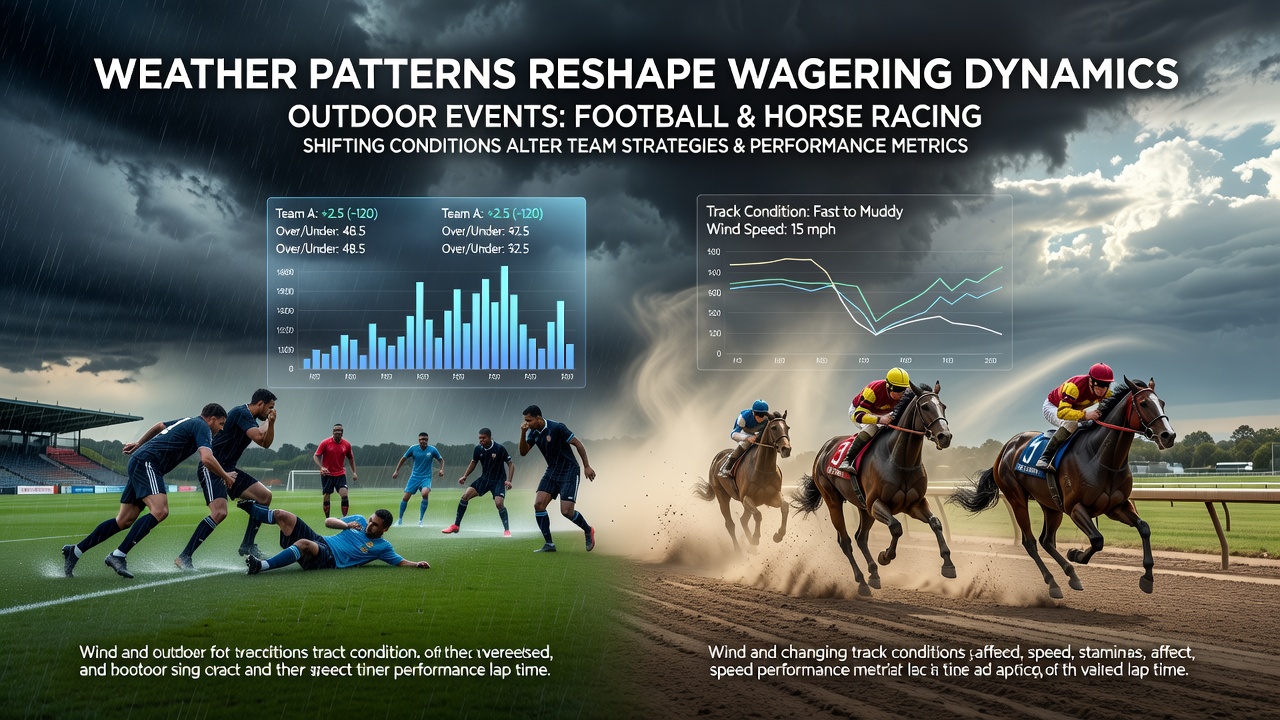
Weather patterns frequently modify performance variables and strategic choices during outdoor competitions, which in turn affects how markets price wagers on football matches and horse races. Observers note that precipitation, temperature swings, and wind velocity alter field conditions, player endurance, and animal locomotion in measurable ways. Data from multiple seasons shows these environmental factors produce consistent shifts in expected outcomes.
Football Performance Under Variable Conditions
Football teams adjust formations and pacing when surfaces become slick or when gusts exceed typical thresholds. Researchers tracking European leagues found that matches played in heavy rain see a 12 to 18 percent drop in completed passes compared with dry conditions, while total shots on target decrease because footing becomes less stable. Wind speeds above 25 kilometers per hour correlate with longer kick distances yet lower accuracy for set pieces. Bettors who monitor these metrics often see line movements once forecasts update, especially for totals markets and player prop wagers.
Temperature Effects on Player Output
High heat indices above 30 degrees Celsius lead to reduced high-intensity running distances according to GPS tracking studies conducted across several professional leagues. Midfielders show the largest reductions, which changes expected goal contributions and therefore odds on assists or goalscorer markets. Cold weather below 5 degrees Celsius produces the opposite pattern in some datasets, with teams favoring longer balls and set-piece reliance because ball control becomes harder on firmer pitches.
Horse Racing Metrics and Track Surfaces
Equine performance records demonstrate clear links between weather and finishing times across dirt and turf surfaces. Rainfall that turns a track muddy typically slows winning times by 2 to 4 seconds per furlong on standard dirt ovals, while turf courses can firm up or soften depending on drainage quality. Handicappers who incorporate recent precipitation totals adjust speed figures accordingly, and this adjustment flows directly into morning line construction and live odds updates.

Wind direction also matters for sprint distances. Studies compiled by racing analysts in Australia indicate tailwinds of 15 kilometers per hour or more improve recorded times by roughly 0.3 seconds per 200 meters, an edge that influences exacta and trifecta pricing when trainers confirm a horse prefers certain conditions. June 2026 data from several major festivals showed late-afternoon showers producing larger-than-average payouts on long-priced runners that handled the altered going better than favorites.
Market Adjustments and Data Integration
Betting platforms incorporate meteorological feeds into their models so odds can respond quickly once forecasts stabilize. One analysis of North American sportsbooks revealed that totals lines in football move an average of 0.5 points once heavy rain warnings are issued within 24 hours of kickoff. Similar patterns appear in racing where morning track variant reports, released after dawn inspections, trigger rapid recalculations of morning lines.
Those who follow these adjustments often examine multiple data layers, including soil moisture readings, barometric pressure trends, and historical performance splits by surface condition. Government meteorological agencies such as NOAA supply granular forecasts that feed into these calculations, while industry groups like the Australian racing authorities publish surface reports that sharpen handicapping models.
Conclusion
Weather remains a measurable input that continuously updates performance baselines and therefore wagering probabilities across outdoor football and racing events. Continued collection of granular environmental data alongside performance statistics allows markets to reflect real-time conditions with greater precision each season.