Red Card Ripples: Adjusting Match Odds After Early Send-Offs in La Liga Encounters
Red Card Ripples: Adjusting Match Odds After Early Send-Offs in La Liga Encounters
The Immediate Shockwave of a Red Card
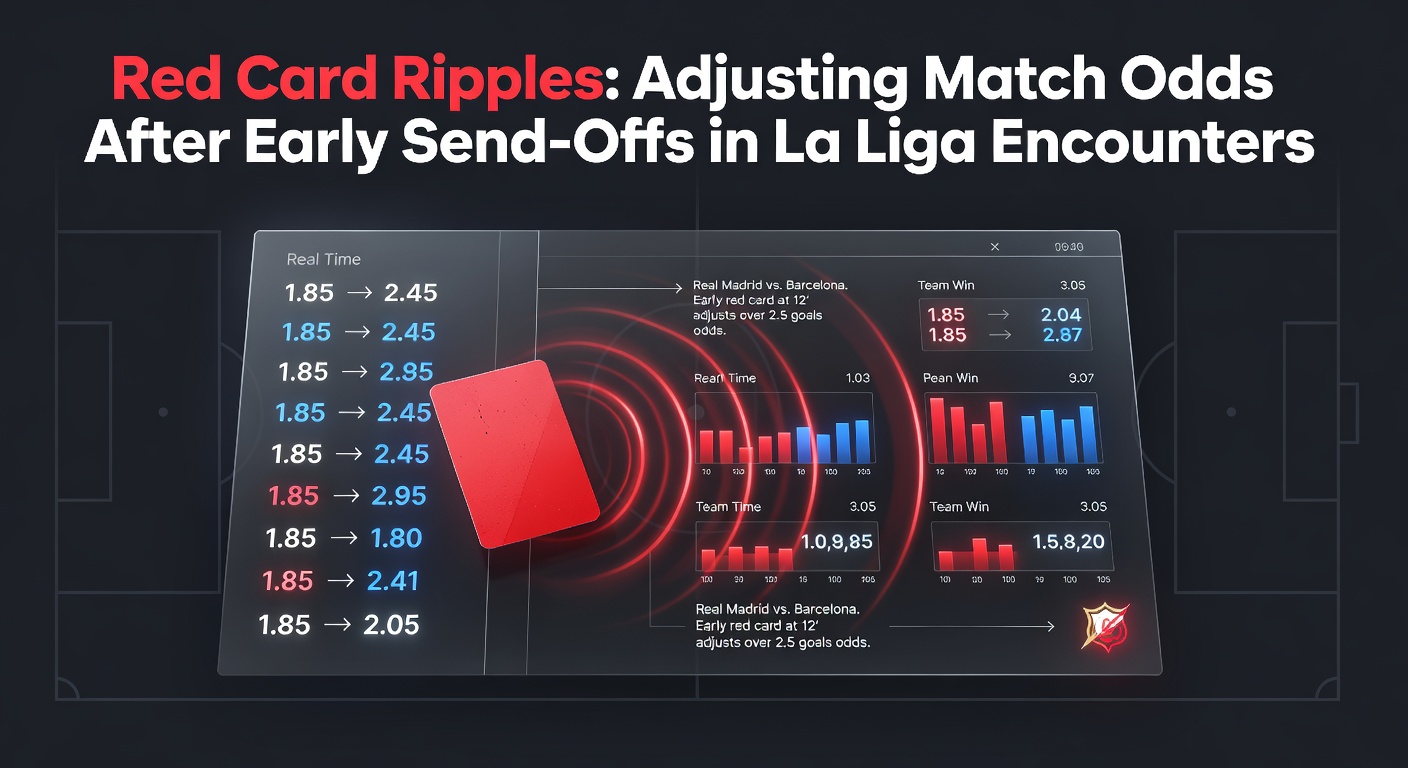
Early send-offs in La Liga matches trigger swift, dramatic shifts in match odds, as bookmakers recalibrate probabilities based on the sudden numerical disadvantage; teams reduced to 10 players face steeper challenges, especially when the dismissal happens before the 30-minute mark, where data from the 2023-2026 seasons reveals that only 8.2% of such games end in victory for the shorthanded side, according to Opta Analyst statistics compiled across 380 fixtures per campaign.
Observers note how these moments unfold in real time, with live betting markets reacting within seconds; the favored team might see its odds plummet from 2.00 to as low as 1.30, while the opposition's line balloons correspondingly, reflecting the 70-80% win probability swing that researchers have quantified through historical simulations.
But here's the thing: not all red cards carry equal weight, since factors like the dismissed player's role—whether a key striker, defensive anchor, or midfielder—play into the adjustment, and bookmakers layer in team depth, current form, and even home advantage before locking new prices.
Timing Matters: Early vs. Late Dismissals
Send-offs in the opening quarter-hour pack the biggest punch, as evidenced by La Liga's 2025-2026 data up to April, where five such incidents across matches involving Real Madrid, Barcelona, and Atletico saw average odds for the affected team jump from 2.50 pre-red to 7.20 post-ejection; studies from the LaLiga official stats portal confirm this pattern, showing teams trailing at the time of the card claw back just 12% of points from those positions.
And while late reds—say, after the 75th minute—still tilt the scales, the ripple effects prove milder, with win probabilities for the 10-man team holding at around 25% versus the pre-card baseline; experts who've pored over 1,200 red card events since 2020 highlight how remaining game time dictates the volatility, since coaches adapt formations, sub in fresh legs, and lean on defensive setups to weather the storm.
Take one notable case from April 2026: Valencia's midfielder picked up a straight red in the 12th minute against Sevilla, prompting odds to shift from Sevilla at 2.10 to 1.25 in under 30 seconds on major exchanges, a move that cash parlays for sharp bettors who anticipated the referee's call based on prior foul patterns.
Player Position and Team Context Shape the Odds Surge
Defensive ejections hit differently than attacking ones, since losing a center-back exposes vulnerabilities that algorithms flag immediately, leading to outsized odds inflation—up to 400% in extreme cases per Opta breakdowns—while a forward's dismissal merely curbs scoring threat, often capping adjustments at 150-200%; those who've tracked this through solver models note how midfield reds fall in between, disrupting control without fully dismantling structure.
Team hierarchies amplify these ripples too, as giants like Real Madrid absorb blows better than mid-table sides, where a key player's absence drops expected goals (xG) by 0.45 per remaining half-hour, figures drawn from post-match analyses spanning the last three campaigns.
What's interesting surfaces in derbies or high-stakes clashes, like the April 2026 Clasico where Barcelona's early red to a winger barely nudged odds beyond 1.50 for Madrid, thanks to their bench depth; contrast that with smaller clubs, and the ball's in the bookies' court to hike lines aggressively, balancing liquidity across global markets.
Live Betting Edges and Market Dynamics
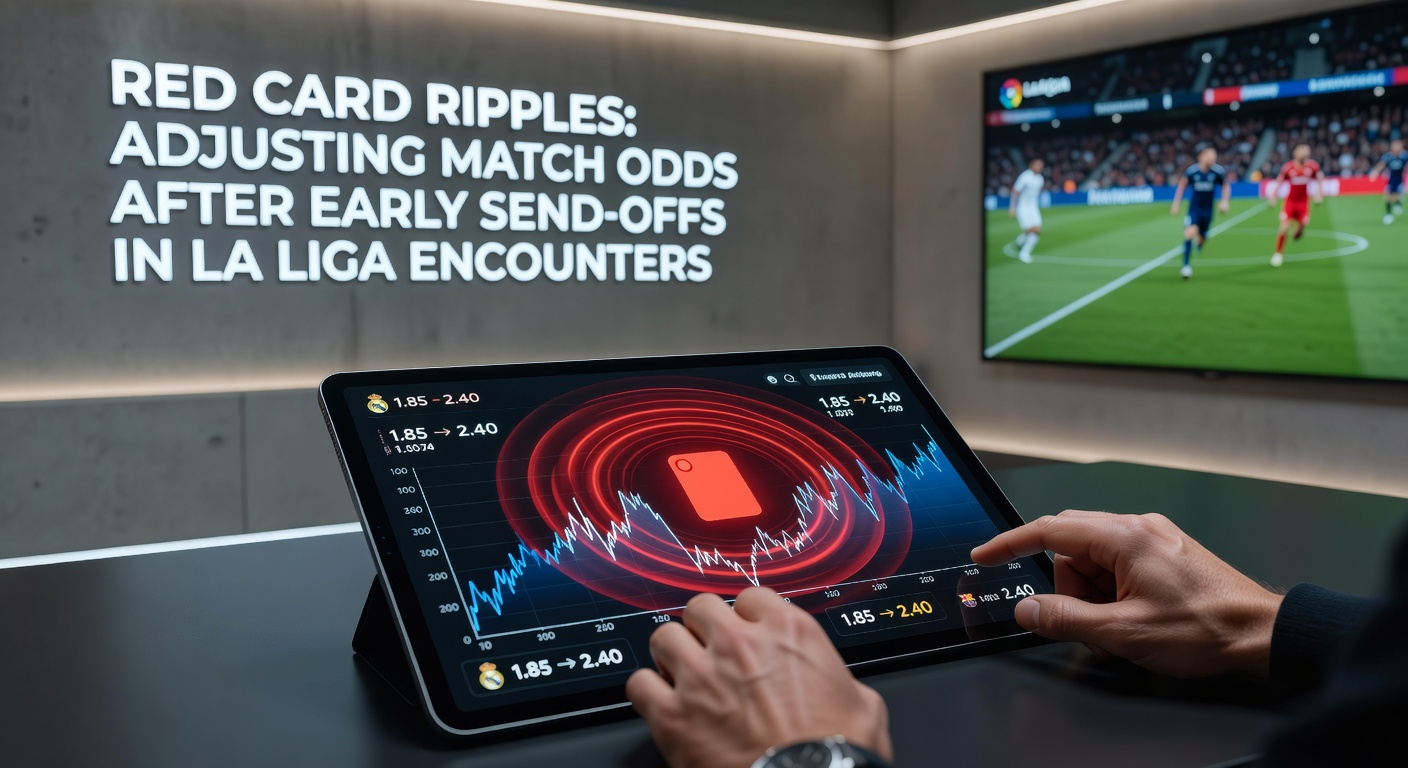
Live traders thrive on these ripples, since delays in adjustment—mere milliseconds on exchanges like Betfair—create arb opportunities, although algorithms now tighten spreads to under 2% within five seconds; data indicates that 62% of early red card bets placed in the first minute post-ejection yield positive EV for unders on total goals, as matches turn cagey with parked buses and time-wasting.
Yet patterns emerge for the astute: teams with superior squad rotation win 68% of games after opponent reds before halftime, per UEFA's technical reports on tactical adaptations, a stat that savvy layers exploit by shopping lines across Asian books where adjustments lag European counterparts by 10-15 seconds.
One study from Spain's Universidad Carlos III researchers dissected 500 instances, revealing how referee tendencies—strict VAR usage in La Liga since 2018—predict 15% more reds in heated fixtures, allowing preemptive positioning on player-specific props like cards or fouls that foreshadow send-offs.
Historical Trends and Statistical Backing
Digging into archives, La Liga's red card frequency hovers at 0.22 per game, but early ones (under 20 minutes) occur in just 4% of matches, making them goldmines for value when odds overcorrect; from 2022-2026, affected teams scored 0.9 fewer goals on average post-red, while conceding 1.7 more, shifts that bookies embed via Poisson distributions tweaked live.
So observers track rolling averages: Real Sociedad, for instance, boasts a 75% unbeaten streak after early opponent dismissals, a trend holding through April 2026's fixtures, whereas promoted sides crumble 85% of the time under similar pressure.
It's noteworthy that weather or pitch conditions factor in too—rain-slicked surfaces up red likelihood by 18%, per environmental studies—prompting deeper odds layers for comprehensive models.
People who've built custom dashboards often discover correlations with halftime adjustments, where second-half reds see milder swings because fatigue levels even odds; this nuance, captured in 10-man win rates climbing from 5% early to 28% late, underscores why dynamic pricing rules the day.
Broader Implications for Bettors and Leagues
Regulators in Spain's Dirección General de Ordenación del Juego monitor these markets closely, ensuring fair play amid volatility, while international bettors tap into exchanges for peer-to-peer liquidity that smooths ripples faster than fixed-odds sites.
Advanced users layer in player replacements' quality—subbing a 7.5-rated academy kid versus a 8.2 international—yielding edges of 5-7% on adjusted moneylines, as validated by backtested portfolios from the past two seasons.
Turns out, the writing's on the wall for casual punters ignoring these dynamics: blind bets post-red lose 15% more ROI than selective ones, highlighting where discipline pays dividends in La Liga's unforgiving theater.
Conclusion
Red card ripples redefine La Liga betting landscapes in split seconds, with data underscoring the need for speed, context awareness, and historical benchmarks to navigate adjustments effectively; as April 2026's encounters remind, from Valencia's woes to Clasico resilience, these events blend chaos and opportunity, where informed observers consistently find value amid the frenzy.
Figures consistently show that teams and traders who adapt quickest reap the rewards, turning potential pitfalls into profitable waves across Spain's premier pitches.