Unraveling the Ties Between Player Exhaustion and Poker Success in Prolonged Play
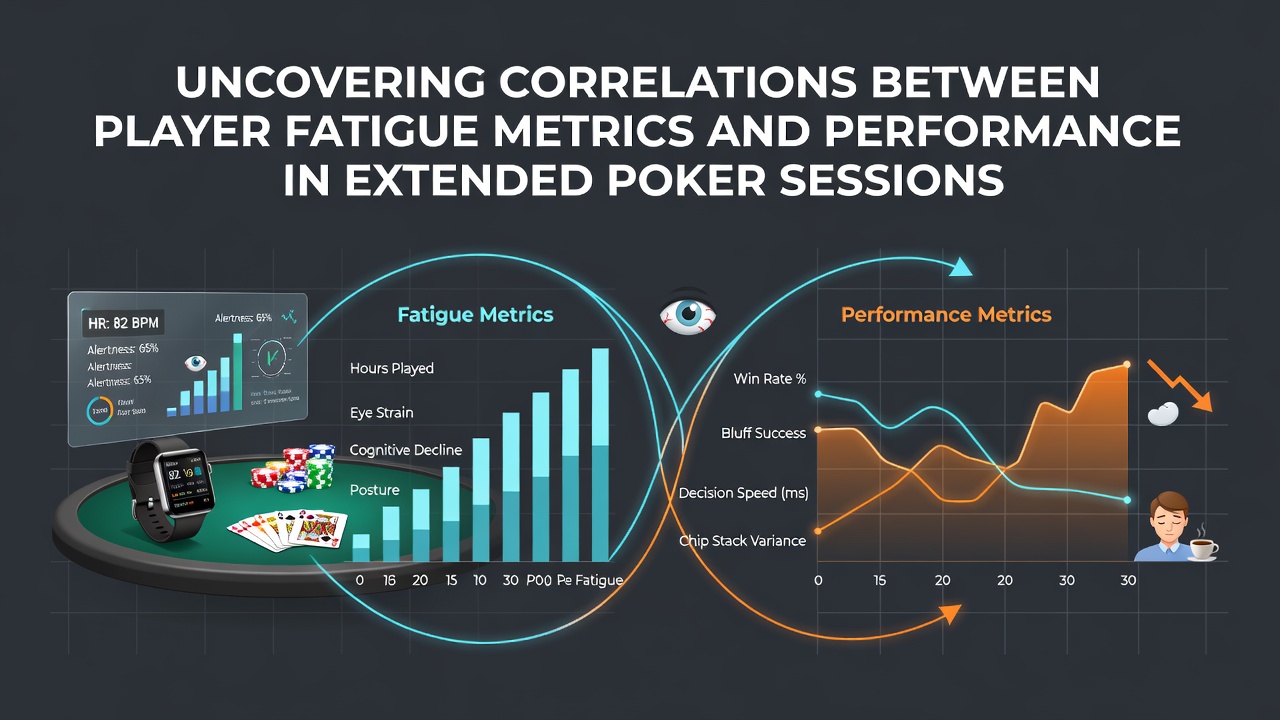
Researchers have tracked how physical and cognitive fatigue builds across hours of continuous poker, and data from multiple studies now links specific metrics like reaction time, error frequency, and decision consistency to measurable drops in win rates. Observers note that extended sessions often stretch beyond eight hours, where heart rate variability and eye movement patterns begin to shift in predictable ways according to records from casino floor monitoring systems. Those who've analyzed tournament logs find that players who maintain steady performance past the ten-hour mark tend to exhibit lower blink rates and more stable posture, while others show clear signs of decline through increased fold errors and slower call responses.
Key Metrics Used in Fatigue Tracking
Studies compile several indicators to quantify fatigue during play, including reaction speed to betting cues, accuracy in hand ranking under time pressure, and physiological signals such as pupil dilation captured via wearable devices. Data from professional circuits in North America reveals that average reaction times lengthen by 15 to 20 percent after six continuous hours, with further slowing observed beyond twelve hours in multi-day events. Researchers at institutions focused on cognitive performance have cross-referenced these readings against session outcomes, establishing correlations where slower responses align with reduced aggression in late-position spots and higher rates of suboptimal river decisions.
Eye-tracking equipment deployed in controlled lab simulations shows that sustained focus leads to narrower visual scanning patterns, which in turn correlate with missed betting opportunities on the flop and turn. Heart rate monitors worn by participants in extended cash game observations indicate rising variability as sessions progress, often coinciding with clusters of consecutive losses that compound the effects of mental strain. Figures from these combined datasets suggest that players who pause for structured breaks every four hours demonstrate steadier metric stability compared with those who push through without interruption.
Performance Patterns Across Session Lengths
Analysis of thousands of hands from online platforms and live rooms demonstrates that win rates peak in the first four to six hours before beginning a gradual descent, with steeper drops appearing after the eight-hour threshold. One dataset compiled from Las Vegas properties highlighted that players logging fourteen-hour sessions posted net losses 28 percent more frequently than their shorter-session counterparts, even when bankroll and skill proxies remained comparable. Those examining solver outputs alongside real-play logs note that deviation from optimal frequencies increases steadily, particularly in bluffing spots where precise sizing matters most.
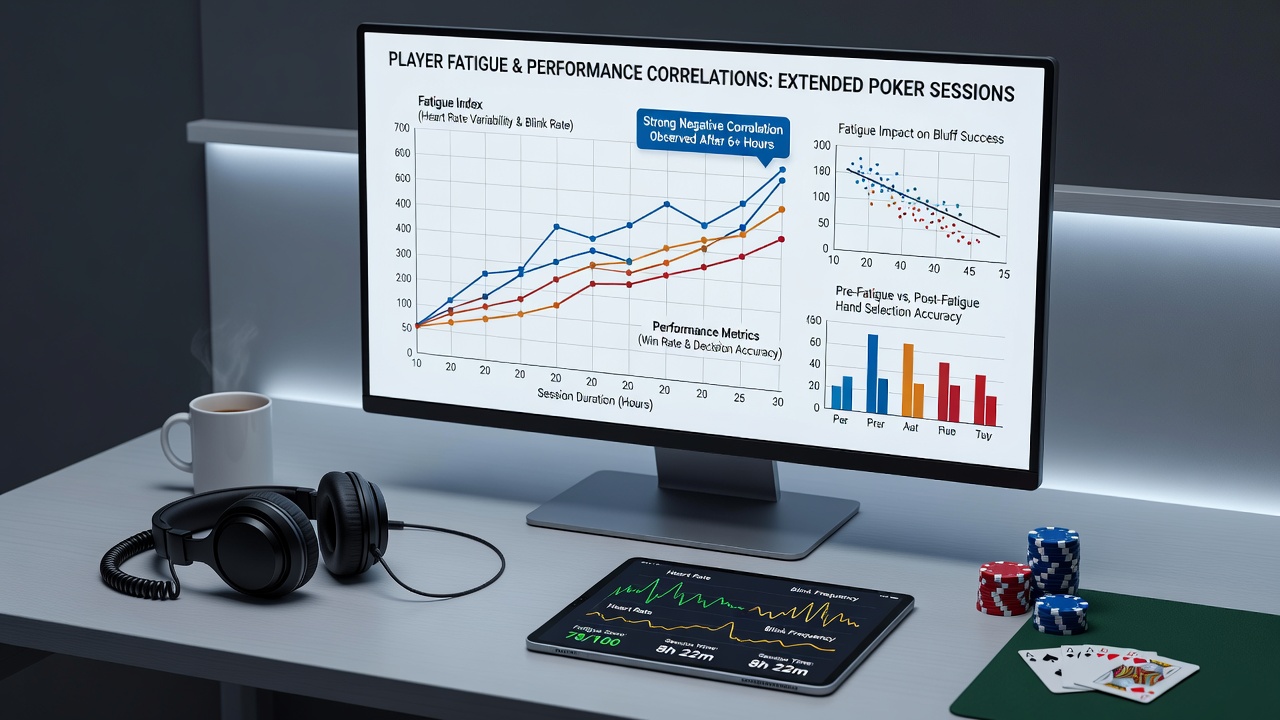
Additional research released in July 2026 by a Canadian research consortium examined over 2,400 tournament participants and found that fatigue metrics such as delayed verbal responses and fidgeting frequency predicted elimination timing with 73 percent accuracy. The same report connected elevated cortisol levels measured mid-session to reduced ability to adjust strategy against changing table dynamics. Observers tracking European circuit events have seen similar trends, where players who compete in back-to-back days without adequate recovery show pronounced increases in check-fold frequency on later streets.
Regional Data and Supporting Research
Records maintained by the Nevada Gaming Control Board include voluntary submissions from larger properties that track player session durations alongside revenue per table, offering indirect insight into how fatigue influences collective performance. A separate academic review published through the Journal of Behavioral Addictions examined Australian poker league participants and identified that those averaging more than nine hours per sitting reported higher instances of post-session cognitive fog, which aligned with next-day performance dips in follow-up matches. These findings complement earlier work from university labs in the United States that used EEG headbands to measure attention lapses during simulated heads-up play.
Industry groups such as the International Center for Responsible Gaming have compiled case studies showing that structured rotation policies in some card rooms correlate with more consistent player metrics across the board. Data from these sources indicates that environmental factors like lighting consistency and ambient noise levels can either accelerate or mitigate the onset of measurable fatigue, depending on how long individuals remain seated without movement.
Conclusion
Collective evidence from physiological monitoring, hand-history analysis, and tournament outcome tracking continues to map clear connections between fatigue indicators and performance erosion in extended poker play. Researchers across multiple regions continue refining measurement tools to better isolate which metrics offer the strongest predictive value for session results, while operators explore practical adjustments that support steadier engagement over time.